
Places Where Clocks Seem to Stop
Some places feel suspended outside ordinary time, not because time has literally stopped, but because change was interrupted and the past remains unusually present.
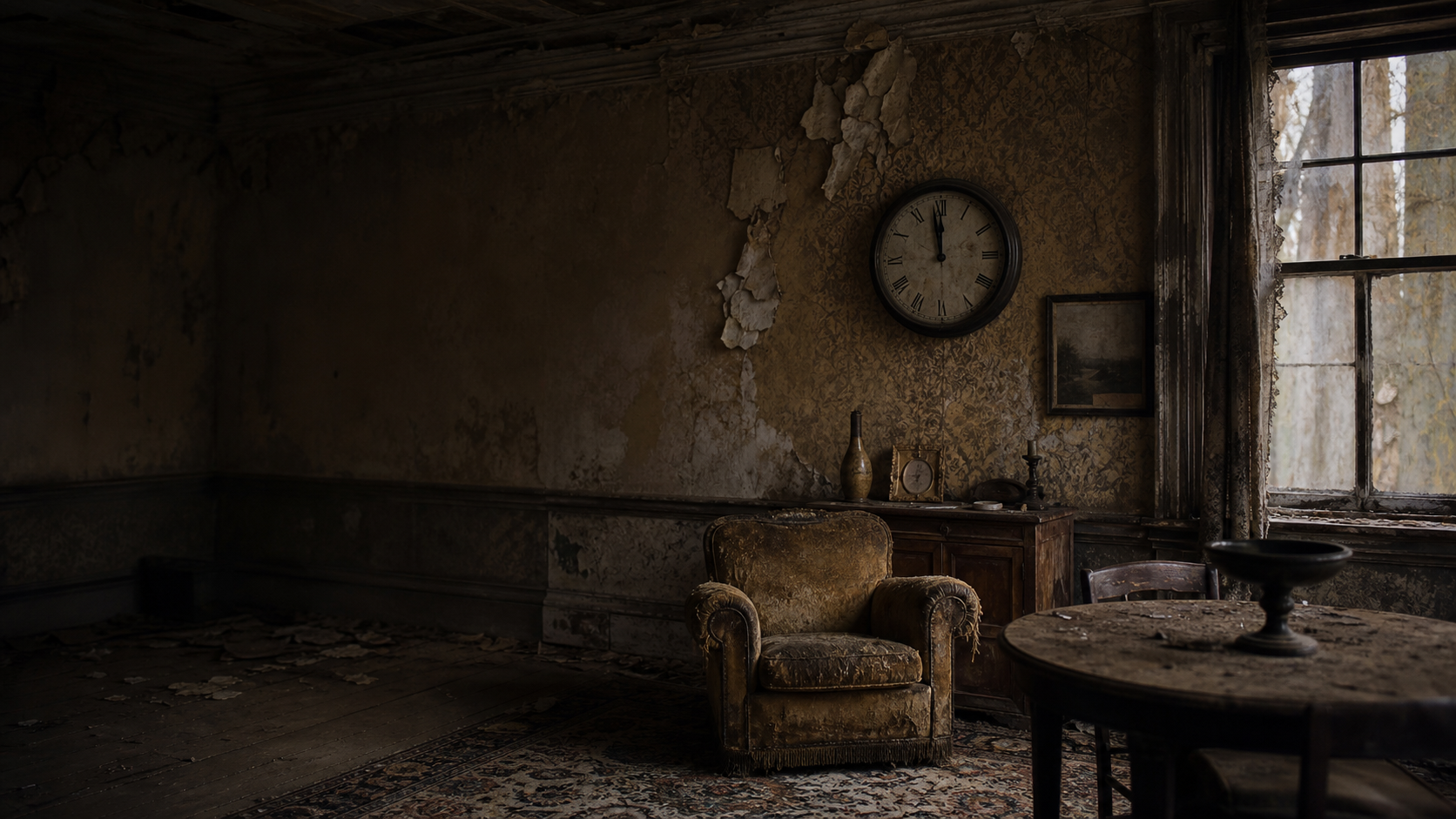
There are places in the world where time seems to have stopped. Not metaphorically, or not only metaphorically. Places where the physical environment is so unchanged from a specific historical moment that the past feels genuinely present. Where the clothes, the furniture, the objects, and the architecture all belong to another era, and the present tense feels like an interruption.
Short answer: Some places stop changing due to isolation, deliberate preservation, economic stagnation, or the consequences of catastrophe. The effect on visitors is a specific and well-documented disorientation: the sense that you have stepped outside the normal flow of time into somewhere that has been waiting.
What Makes a Place Feel Frozen in Time
The sensation of a place where time has stopped requires a specific combination of conditions. The physical environment must be largely unchanged from an earlier period. The objects, structures, and arrangements must belong to that period rather than the present. And the change that would normally have happened, such as renovation, replacement, or updating, must have been interrupted or prevented.
What causes that interruption varies. Sometimes it is isolation: a village so remote that development simply never arrived. Sometimes it is catastrophe: a place that was evacuated suddenly and never resettled. Sometimes it is poverty: the economics of renovation and updating were never available. And sometimes it is deliberate: someone decided this place should stay as it is, and enforced that decision over decades.
Each of these causes produces a slightly different character of frozen time. The deliberate preservation feels curated. The poverty-driven stagnation feels genuinely worn. The catastrophe produces something in between: intact but damaged, unchanged but disturbed.
Pripyat and the Frozen Soviet City
The clearest modern example is Pripyat in northern Ukraine. Built in the 1970s to house workers at the Chernobyl nuclear plant, it was evacuated in April 1986 following the reactor explosion. Residents were told to leave for three days. They never returned.
The city has been slowly decaying since then. But the basic structure of Soviet urban life, including the apartment blocks, the amusement park, the school, the supermarket, and the cultural center, remains in place. Textbooks are still on classroom floors. Bumper cars rust in the fairground. A swimming pool’s tiles are slowly being reclaimed by vegetation.
What makes Pripyat particularly potent as an example is the specificity of the moment it froze. It stopped at April 1986, and everything inside it belongs to that year. Its contents are still witnesses to that moment.
Hashima Island and the Abandoned City at Sea
Off the coast of Nagasaki, Japan, Hashima Island was a coal mining facility that housed up to five thousand people in some of the most densely constructed residential buildings ever built. When the coal ran out and the mine closed in 1974, the island was evacuated. No one has lived there since.
The concrete apartment blocks are now in advanced stages of collapse. But the basic urban structure, including the walkways, stairwells, and community buildings, is still legible. Walking through Hashima, which was opened to limited tourism in 2009, produces the sensation of moving through a city-shaped absence. Everything is there except the people.
The island’s extreme isolation has preserved it from the gradual change that would have affected a mainland site. It could not be repurposed. It could not be slowly built over. It simply remained, in the middle of the sea, accumulating decay in the exact shape of the life that was lived there.
Villages Preserved by Poverty and Isolation
Not all frozen places result from catastrophe. Some were simply bypassed by the economic forces that usually drive change. Villages in rural Romania, Bulgaria, Portugal, and Appalachian America have been documented where the built environment has changed relatively little since the early twentieth century, not because of any event, but because the economic conditions that would fund renovation never arrived.
These places have a different quality from catastrophe sites. The people are still there, or were until recently. Life continued. But the physical environment stopped updating, and the gap between the place and the present century became more pronounced over time.
Useful distinction: A preserved place is often held still on purpose. A stagnant place may look preserved because it never had the money, population, or access required to change.
There is nothing preserved or curated about these villages. The unchanged quality is simply what happens when a place does not have the resources to change. And the effect on visitors is often as strong as it would be at a more dramatically frozen site: a sense of dislocation, of having stepped out of the expected flow of time into somewhere that operates on a different schedule.
The Psychology of the Frozen Moment
The experience of a time-stopped place activates something specific in how the mind processes temporal context. Normally, the environment provides continuous cues about when you are: the style of objects, the technology present, the aesthetic conventions of architecture and design. When those cues belong to a different era, the brain faces a mild but genuine conflict.
The body is in the present. The environment is signaling the past. The result is a specific kind of disorientation that is not unpleasant so much as unsettling: a sense that the categories of before and now have become unstable.
Some people describe it as peaceful. Others describe it as eerie. Both responses make sense. A frozen place has a certain stillness; it is not competing with the present for attention. But the reason for the stillness is usually something that was interrupted, and the mind keeps registering the interruption.
| Place | What stopped the clock |
|---|---|
| Pripyat, Ukraine | Nuclear evacuation, April 1986 |
| Hashima Island, Japan | Coal mine closure, 1974 |
| Pompeii, Italy | Volcanic eruption, 79 AD |
| Craco, Italy | Landslide evacuation, 1963 |
| Remote Appalachian villages, USA | Economic isolation and poverty |
Pompeii and the Oldest Example
Pompeii is the most ancient and most studied example of a place where time stopped. The eruption of Vesuvius in 79 AD buried the city under volcanic material, preserving it in a moment so specific that archaeologists have recovered the shapes of food still in pots, graffiti on walls, and the positions of people as they died.
What Pompeii demonstrates is the furthest extension of the frozen-place phenomenon: a site where the stopped moment is nearly two thousand years in the past, and yet the specificity of the preservation still carries emotional weight. Visitors describe feeling the presence of the lives that were there, not as a ghost story, but as a genuine encounter with human particularity across an enormous span of time.
That is what frozen places do at their most powerful. They collapse the distance between then and now. They make a specific moment feel accessible rather than historical. And they remind visitors that the past is not as remote as the calendar makes it seem: sometimes it is just around a corner, behind a door, under a few meters of ash.
What These Places Are Actually Preserving
Frozen places preserve more than objects. They preserve arrangements: the specific way things were organized at a specific moment, which tells you about how people lived, what they prioritized, and what they were doing when everything stopped.
An abandoned classroom in Pripyat tells you about Soviet education in 1986 in a way that a museum exhibit cannot. A collapsed apartment on Hashima tells you about the density of industrial housing in postwar Japan more vividly than any description. A perfectly preserved house from a rural village in 1920 tells you about domestic life in ways that photographs and documents can only approximate.
The frozen moment is an accidental archive. And like most accidental archives, it contains things that were never meant to be preserved, which is precisely what makes it so valuable and so strange to encounter.