
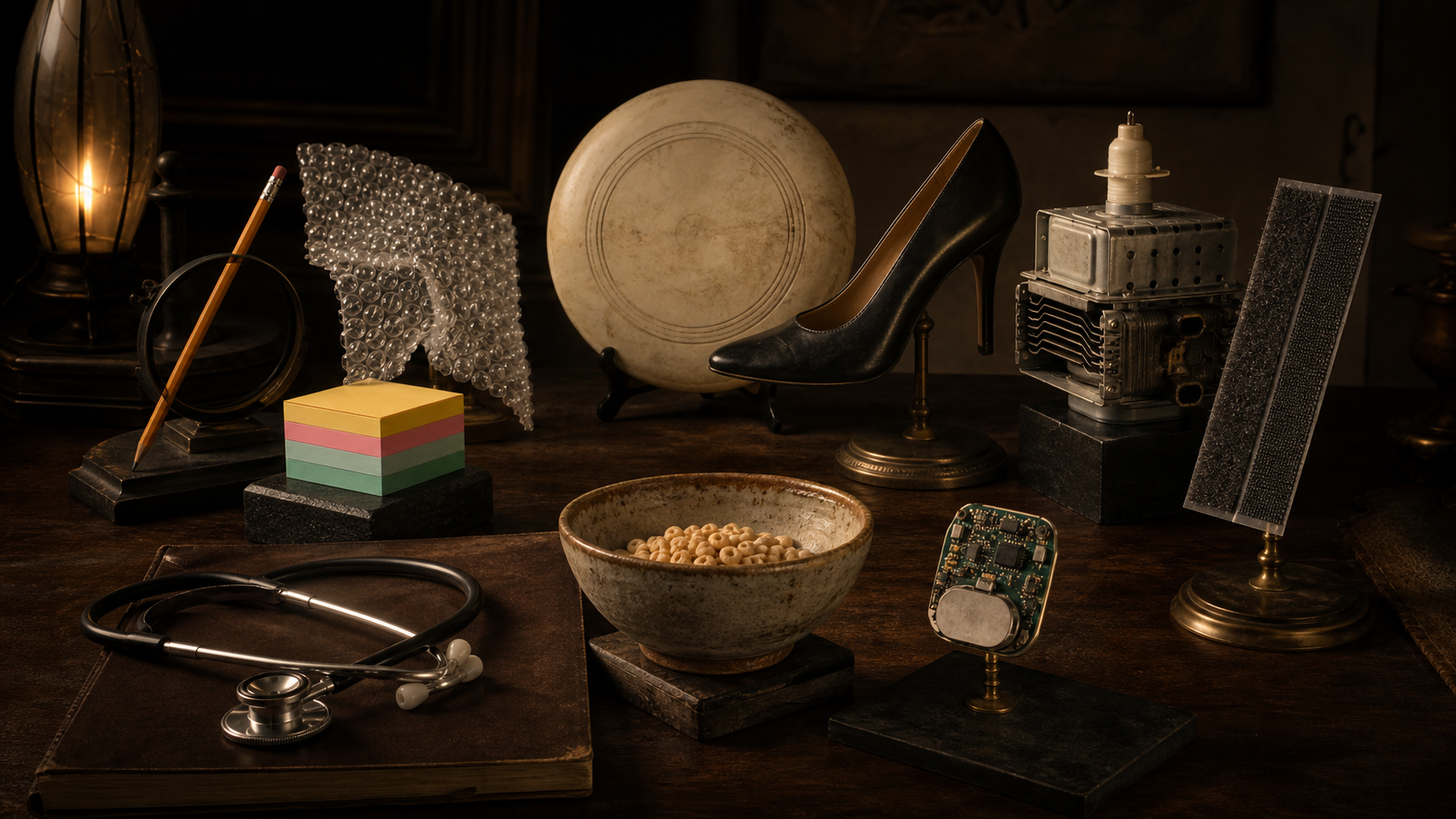
10 Everyday Objects With Weird Origins
The ordinary things around us often began as mistakes, failed products, or solutions to problems nobody remembers.
The objects that fill everyday life feel obvious. They exist because they are useful, and they look the way they do because that is the sensible way to make them. But most ordinary objects have histories that are stranger, more accidental, and more contingent than their mundane presence suggests. Here are ten of them.
01. The Pencil (and Its Non-Graphite Name)
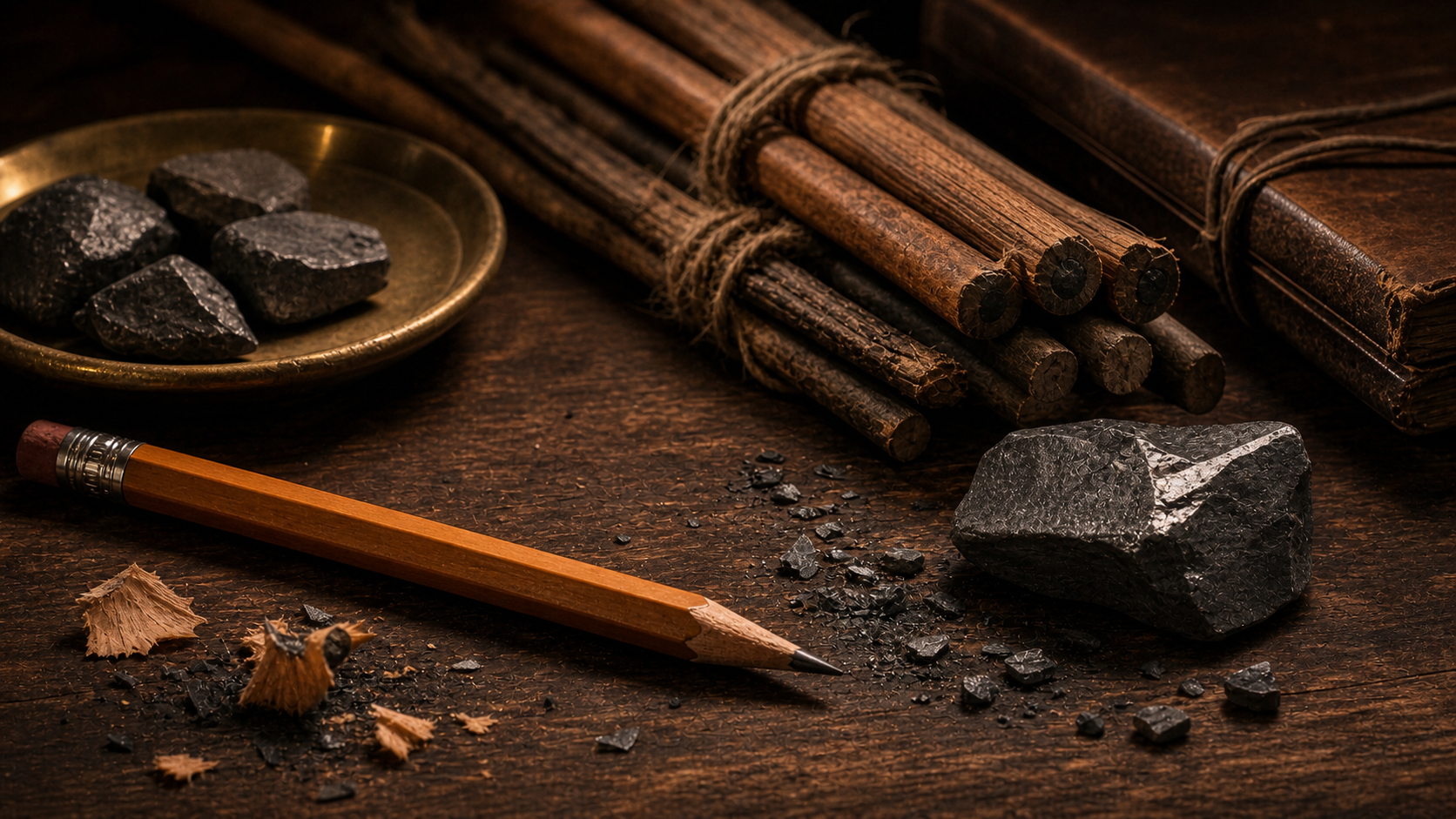
The pencil's core is not lead and never was. When a large deposit of pure graphite was discovered in Borrowdale, England, in the sixteenth century, it was initially mistaken for a form of lead ore. The name stuck — lead pencil — even after it was established that graphite was a form of carbon. The graphite was so pure and so useful for marking that pieces of it were wrapped in string or wood for easier handling. That wrapping is the ancestor of the modern pencil casing.
The wooden casing took more than two centuries to standardize. Before that, pencils were lumps of graphite in various improvised holders. The hexagonal cross-section that most pencils have today was not adopted for any mechanical reason — it was introduced by a manufacturer who found it prevented the pencils from rolling off desks.
02. Post-it Notes
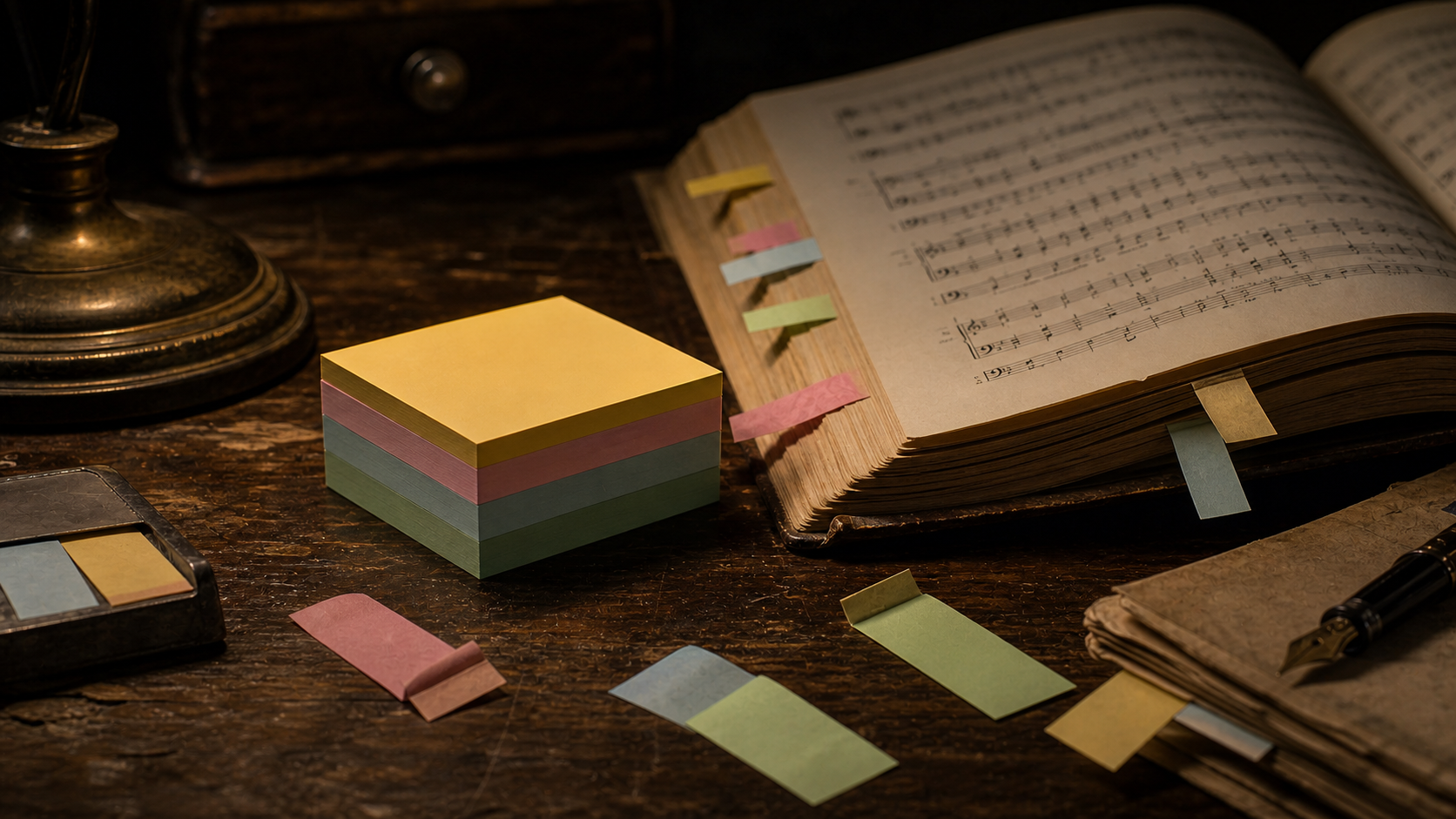
The adhesive that makes Post-it Notes possible was invented by Spencer Silver at 3M in 1968, but Silver could not find a use for it. It was too weak to be a conventional adhesive — it stuck lightly and could be removed without leaving residue, which seemed to make it useless. Silver spent years promoting the adhesive internally without success.
The application came from a colleague, Art Fry, who was frustrated that the bookmarks he used in his choir hymnal kept falling out. He remembered Silver's adhesive and applied it to paper. The result was a bookmark that stayed in place and could be removed without damaging the page. It took several more years and an unusual distribution strategy before the product reached consumers, but the adhesive had been waiting for the right use case for over a decade before anyone found it.
03. Bubble Wrap
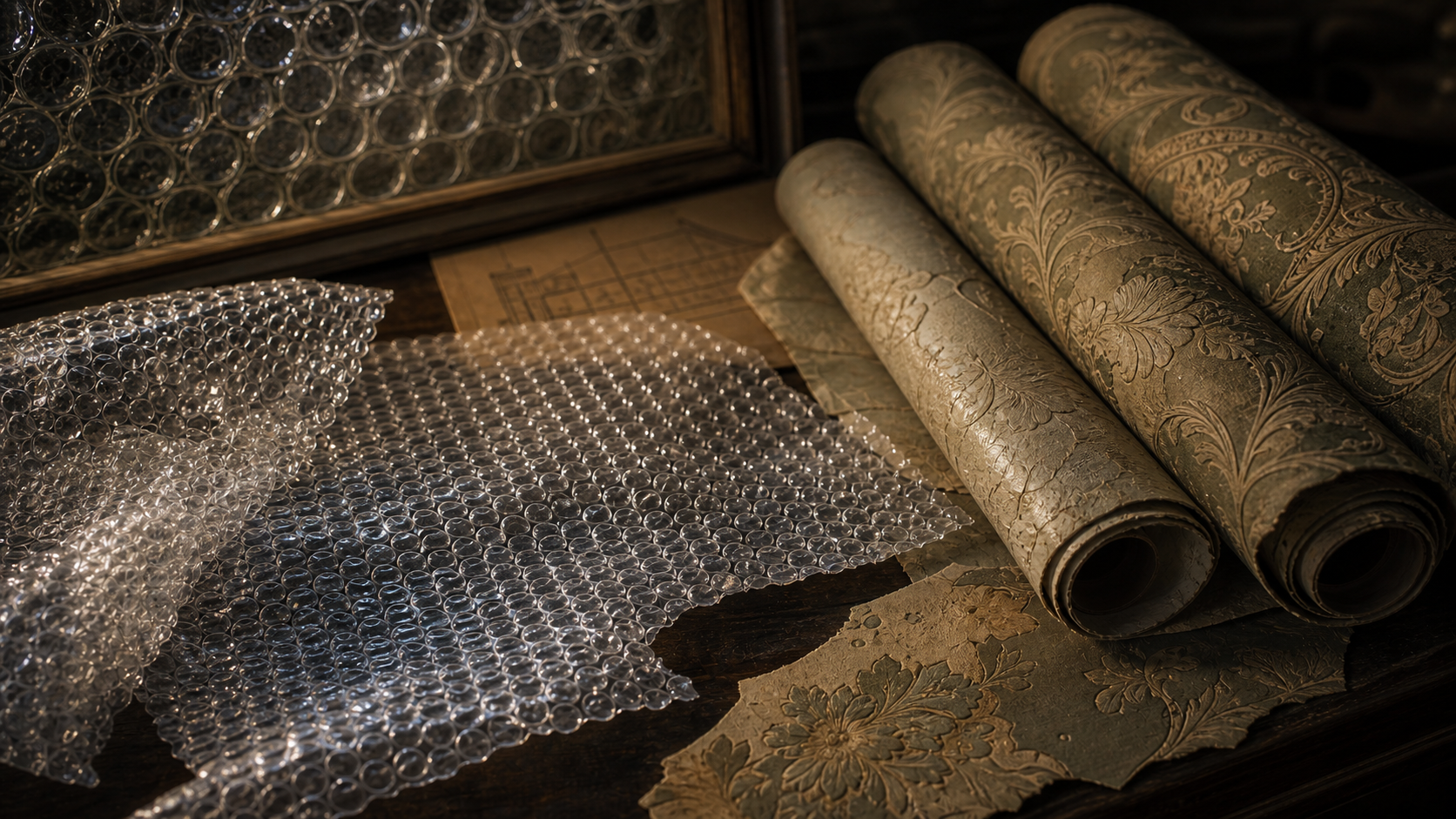
Bubble wrap was not designed to protect fragile objects. It was designed to be textured wallpaper. In 1957, inventors Alfred Fielding and Marc Chavannes sealed two shower curtains together, trapping air bubbles between them, with the intention of creating a three-dimensional wallpaper product. The wallpaper did not succeed commercially.
The inventors then tried to market the material as greenhouse insulation. That also failed. It was only when IBM needed a way to protect the new 1401 computer during shipping in 1959 that bubble wrap found the application it is now inseparable from. The popping of the bubbles — now so associated with the product that it has become a recognized form of stress relief — was entirely incidental to any of the original design intentions.
04. The Frisbee
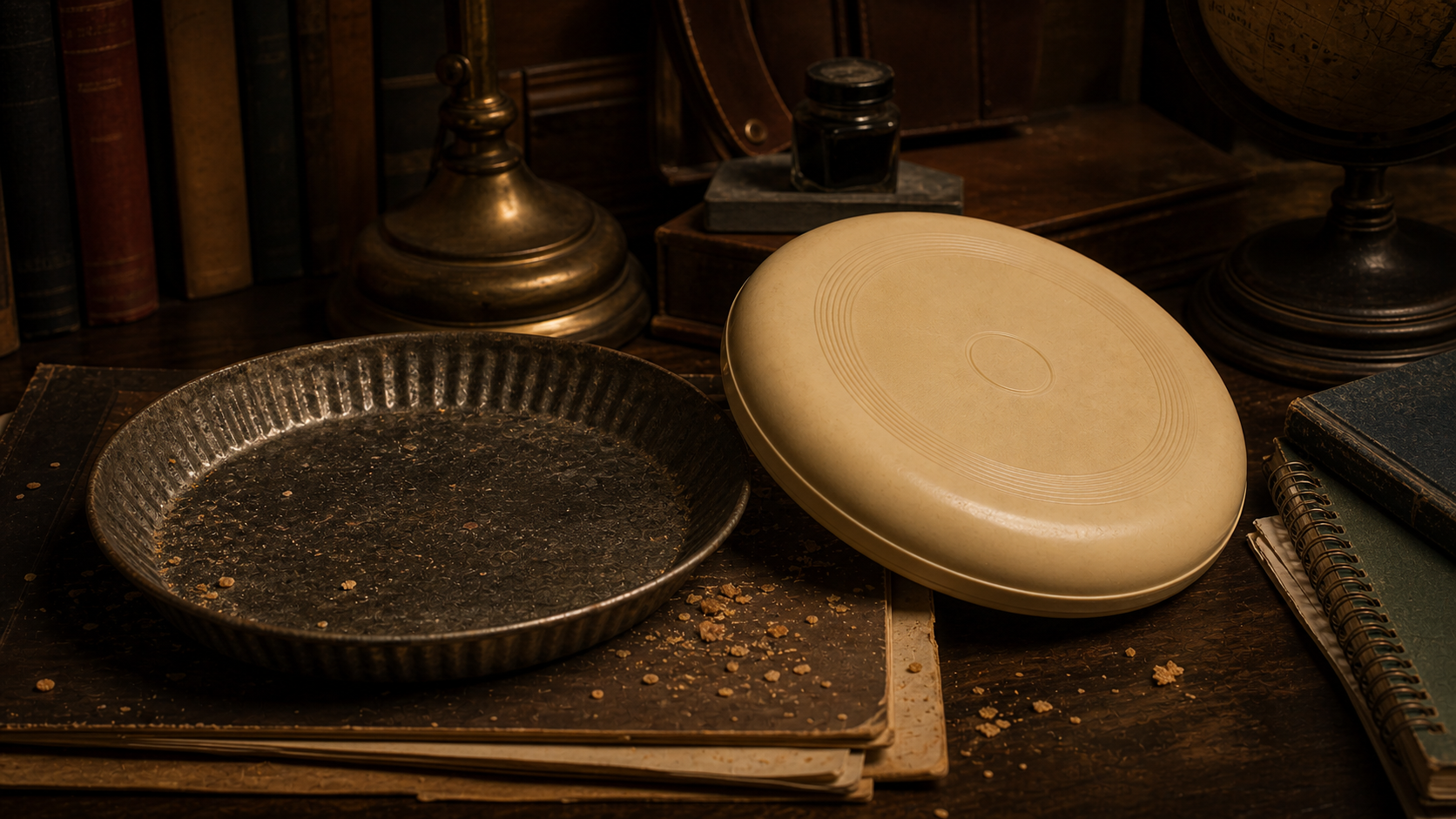
The Frisbee's origin is one of the better-documented accidental invention stories. The Frisbie Pie Company of Bridgeport, Connecticut, supplied pies to Yale University, among other New England colleges, in the early twentieth century. The company's round pie tins were stamped with the Frisbie name. Students discovered that the empty tins could be thrown and caught, and the practice spread across college campuses.
Walter Frederick Morrison independently developed a plastic flying disc in the 1940s and 1950s, unaware of the pie tin tradition. When toy company Wham-O purchased his design in 1957, they renamed it Frisbee — a deliberate near-homophone of the pie company name — after discovering the existing college throwing tradition. The pie company itself closed in 1958, one year after the plastic disc that would carry its name into permanent recognition reached the market.
05. High Heels
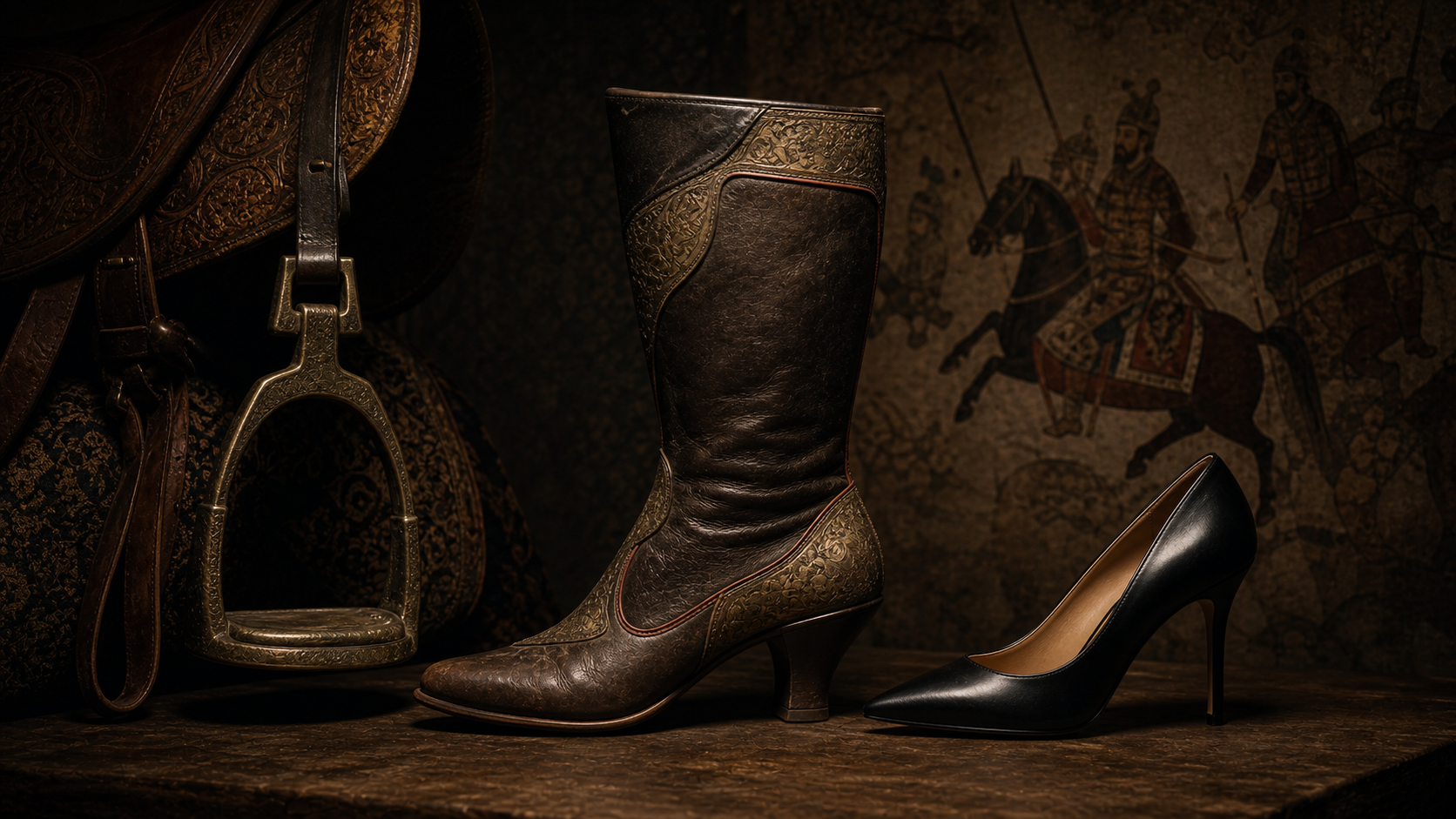
High heels were originally designed for men, and for functional rather than aesthetic reasons. Persian cavalry soldiers wore heeled boots in the ninth and tenth centuries to help keep their feet in stirrups while riding. The heel provided a stable platform for standing in the stirrup and shooting a bow.
The style reached Europe in the seventeenth century, carried by Persian ambassadors and adopted enthusiastically by European aristocracy — starting with men. Louis XIV of France was particularly associated with high-heeled shoes, which he wore to compensate for his modest height and which became a status symbol at the French court. Women began wearing heels partly in imitation of masculine fashion. The gendered association that now seems definitional to the object is only a few centuries old and runs in the opposite direction from the object's origin.
06. The Microwave Oven
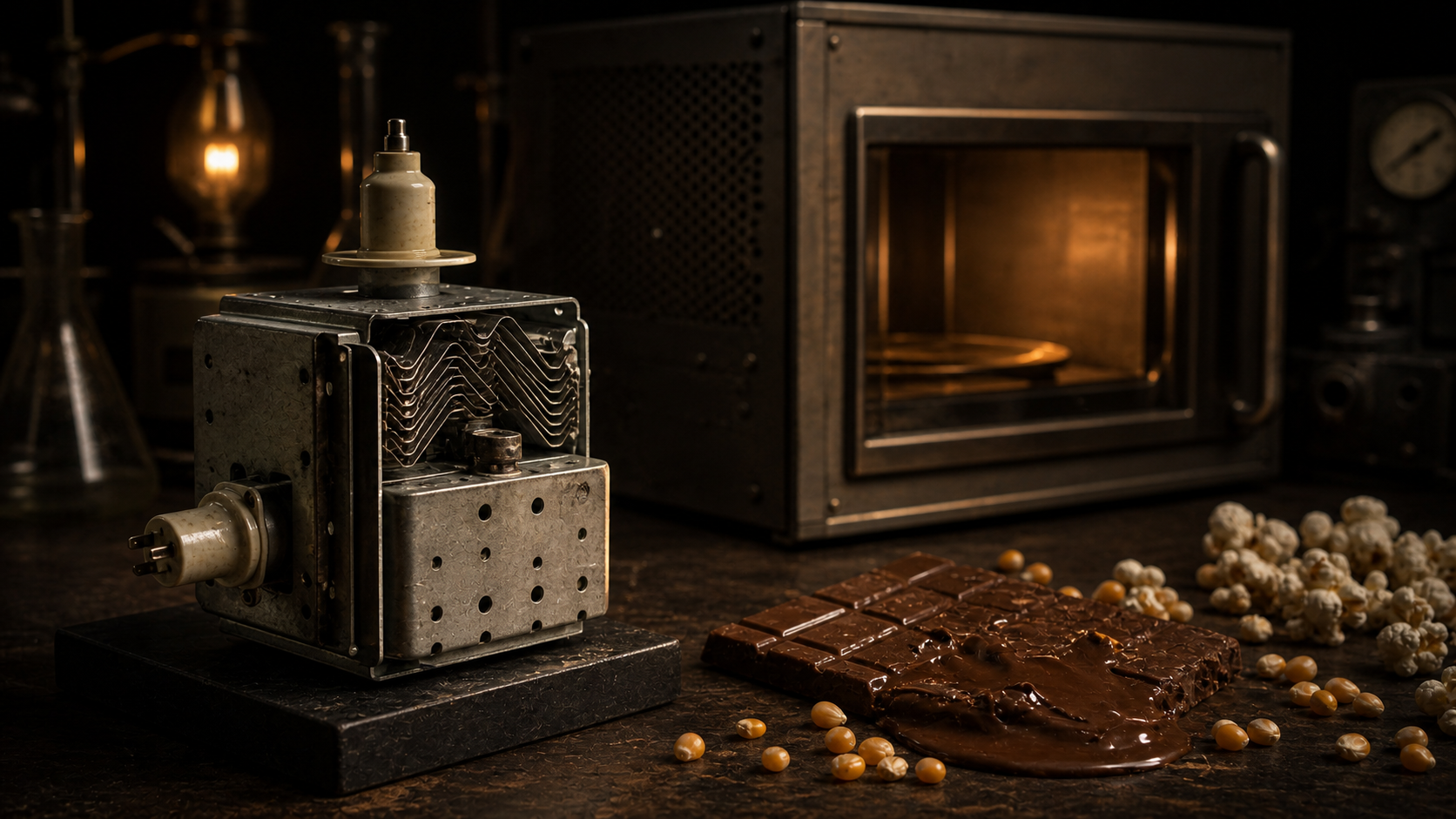
The microwave oven was discovered by accident in 1945 by Percy Spencer, an engineer at Raytheon working on radar technology. While standing near an active magnetron — the component that generates microwave radiation in radar equipment — Spencer noticed that a chocolate bar in his pocket had melted. He began experimenting deliberately, placing popcorn kernels near the magnetron and then an egg, which exploded.
The first commercial microwave oven, released in 1947, was nearly two meters tall, weighed over three hundred kilograms, and cost the equivalent of tens of thousands of dollars in today's money. It was marketed initially to restaurants and industrial kitchens. The countertop version familiar today did not appear until 1967, more than two decades after the accidental discovery.
07. Velcro
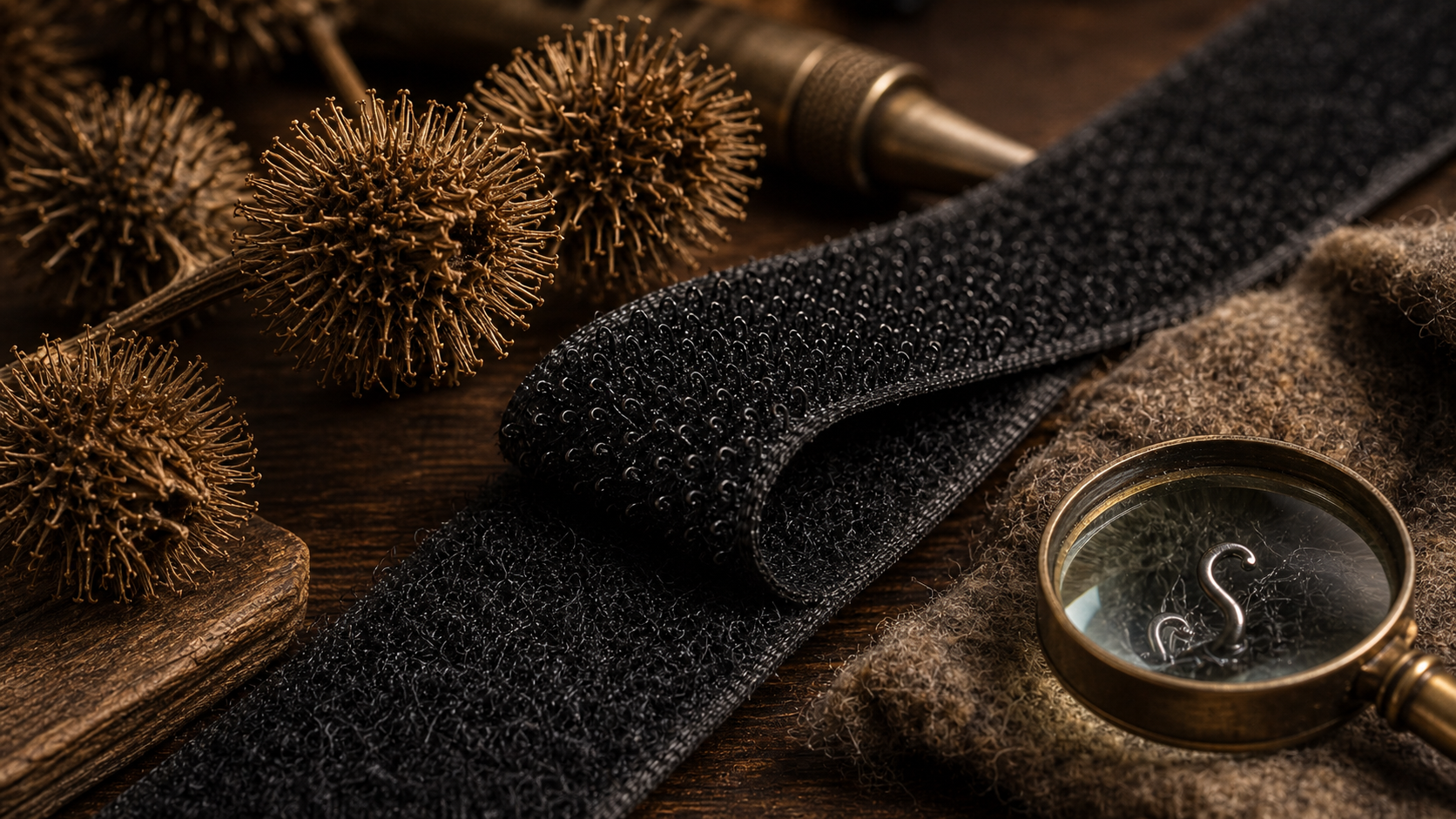
Velcro was invented by Swiss engineer George de Mestral in 1941, after returning from a hunting trip in the Alps and spending time removing burrs from his dog's fur and his own clothing. De Mestral examined the burrs under a microscope and found that they attached themselves through tiny hooks that caught in loops of fabric and fur.
It took him nearly a decade to develop a manufactured version of the mechanism, working with a weaver in Lyon, France, to produce nylon hooks and loops that replicated the burr's attachment system. The name Velcro is a compound of the French words velours and crochet — velvet and hook. NASA's adoption of the material in the space program in the 1960s gave it visibility and credibility that accelerated its commercial adoption.
08. The Stethoscope
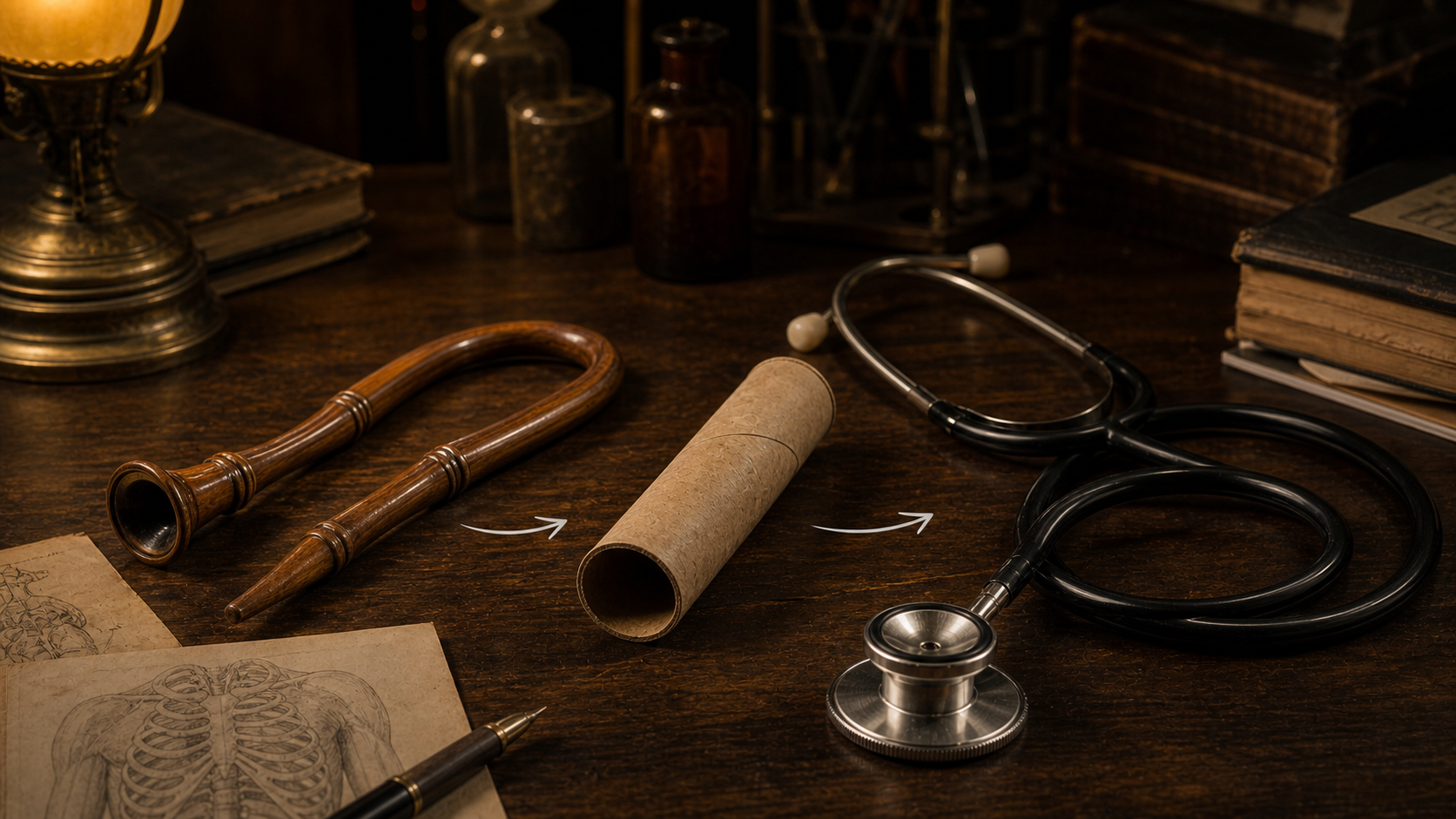
The stethoscope was invented in 1816 by French physician René Laennec specifically because he was uncomfortable placing his ear directly against a patient's chest. The patient in question was a young woman, and direct auscultation — listening with the ear pressed against the body — felt inappropriate. Laennec rolled a sheet of paper into a tube, placed one end against the woman's chest and the other against his ear, and found that the sounds of the heart were transmitted more clearly through the tube than by direct contact.
He went on to develop wooden versions and to write extensively on what could be heard through the instrument. The stethoscope was not an improvement on an existing technology — it was the creation of a new one, prompted by a social discomfort that turned out to produce a better diagnostic tool than the method it replaced.
09. Corn Flakes
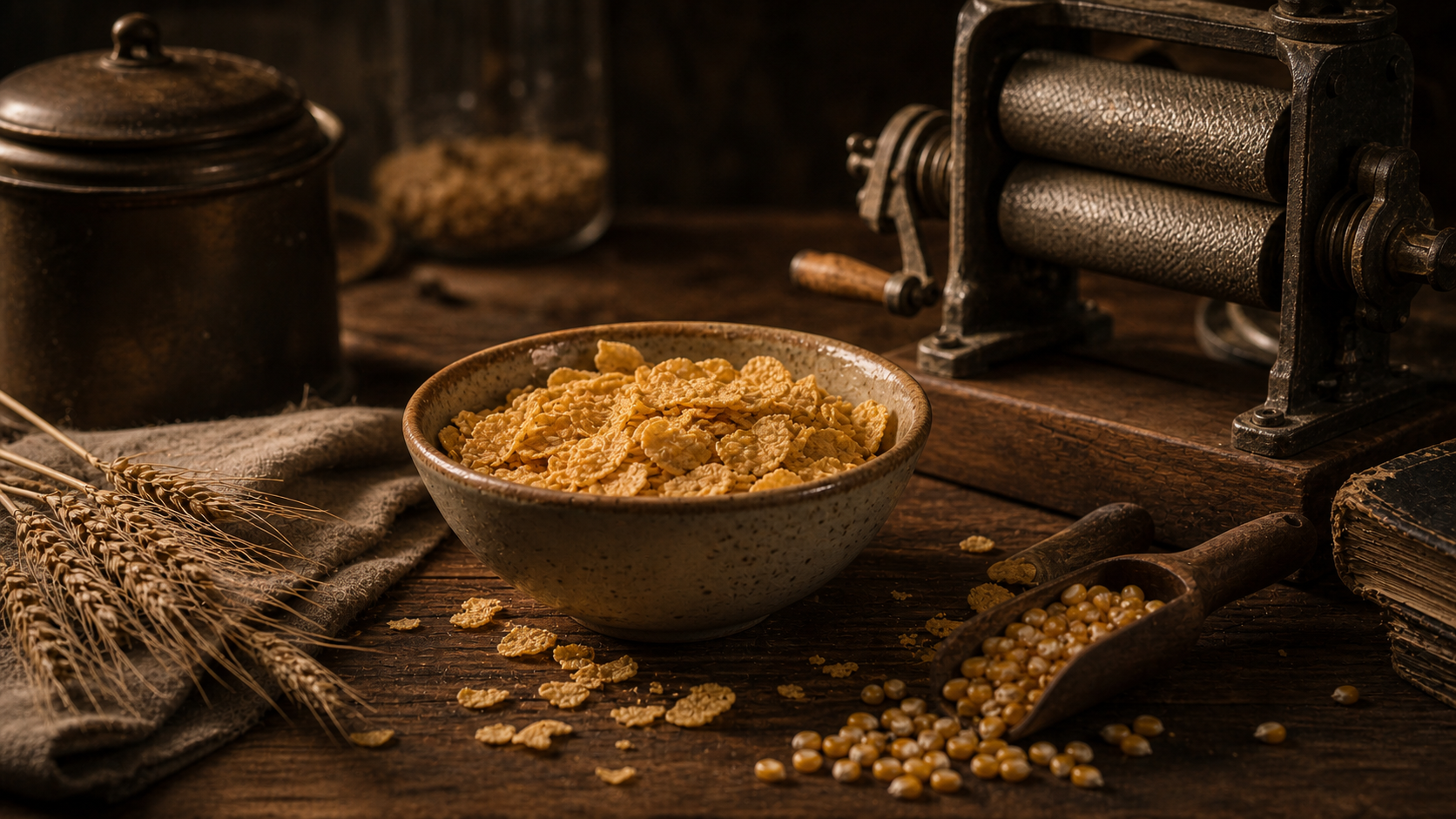
Corn flakes were developed in the 1890s by John Harvey Kellogg at the Battle Creek Sanitarium in Michigan, where Kellogg served as medical superintendent. The sanitarium followed Seventh-day Adventist health principles, which included strict vegetarianism and a belief that bland food reduced what Kellogg considered harmful physical urges.
The flakes were created accidentally when a batch of cooked wheat was left out and went stale. When the stale wheat was run through rollers intended to produce sheets of dough, it came out as individual flakes. Kellogg served these baked and found that patients preferred them. He later adapted the process to corn. His brother Will Keith Kellogg, who managed the business side of the sanitarium, eventually added sugar to the recipe over John's objections — which drove a permanent rift between them and produced the breakfast cereal most people recognize today.
10. The Pacemaker
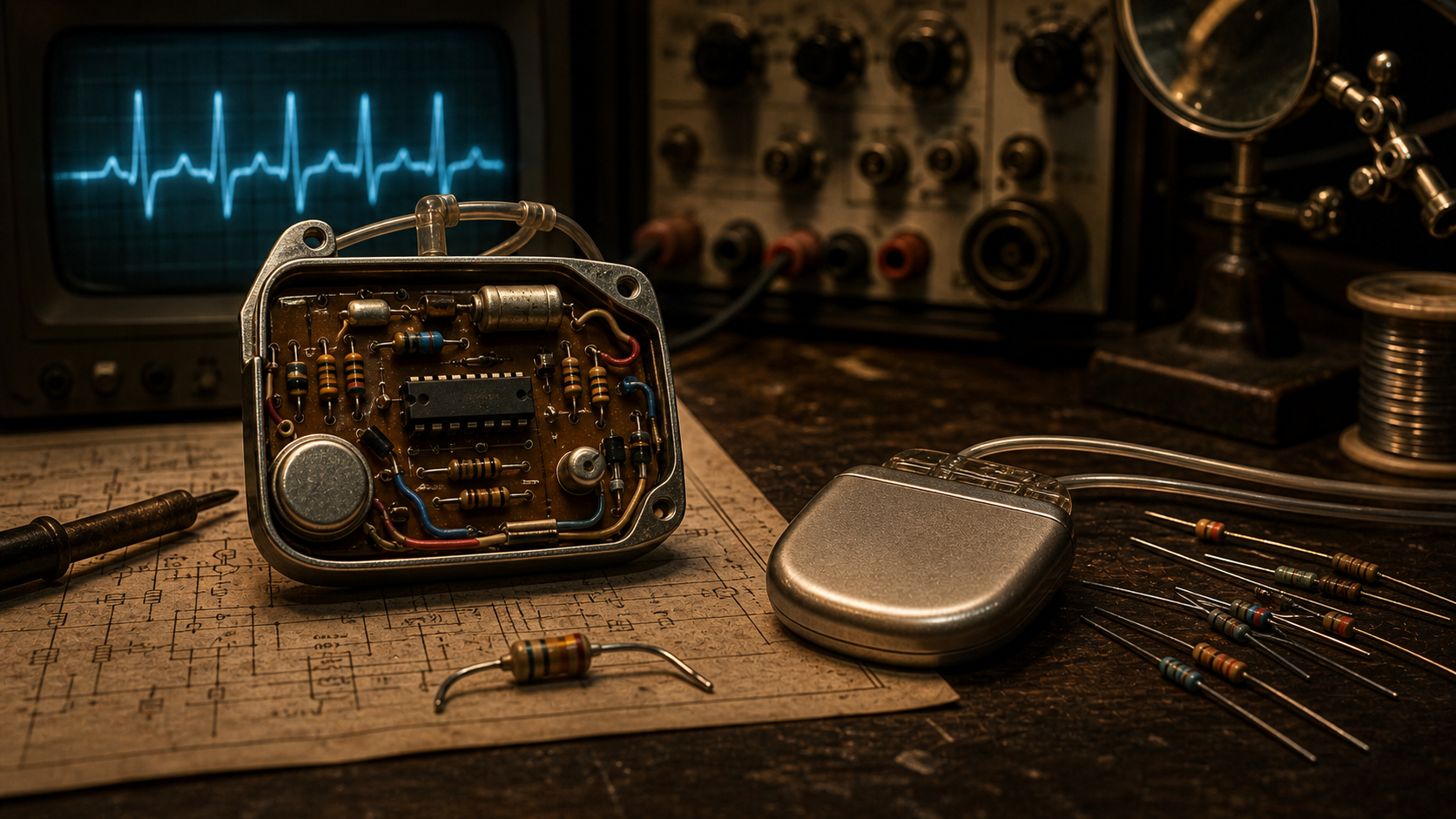
The cardiac pacemaker was invented by accident in 1956 by Wilson Greatbatch, an engineer who was building a circuit to record heart sounds. He reached into a box of resistors for a component and grabbed the wrong one. The circuit he built with the incorrect resistor produced a rhythmic electrical pulse rather than the recording function he had intended.
Greatbatch recognized that the pulse resembled the natural electrical rhythm of the heart and spent the next two years developing the component into an implantable device. The first implantable pacemaker was placed in a human patient in 1958. The wrong resistor has since been credited with saving millions of lives. Greatbatch kept one of his early prototype devices and referred to the wrong resistor as the most important mistake he ever made.
The history running beneath ordinary objects is rarely the history of careful invention aimed at the precise outcome achieved. It is more often the history of accidents noticed, failed applications redirected, wrong materials producing right results, and discomforts that turned out to be productive. The mundane appearance of everyday things conceals an almost universally stranger story than the objects themselves suggest.