
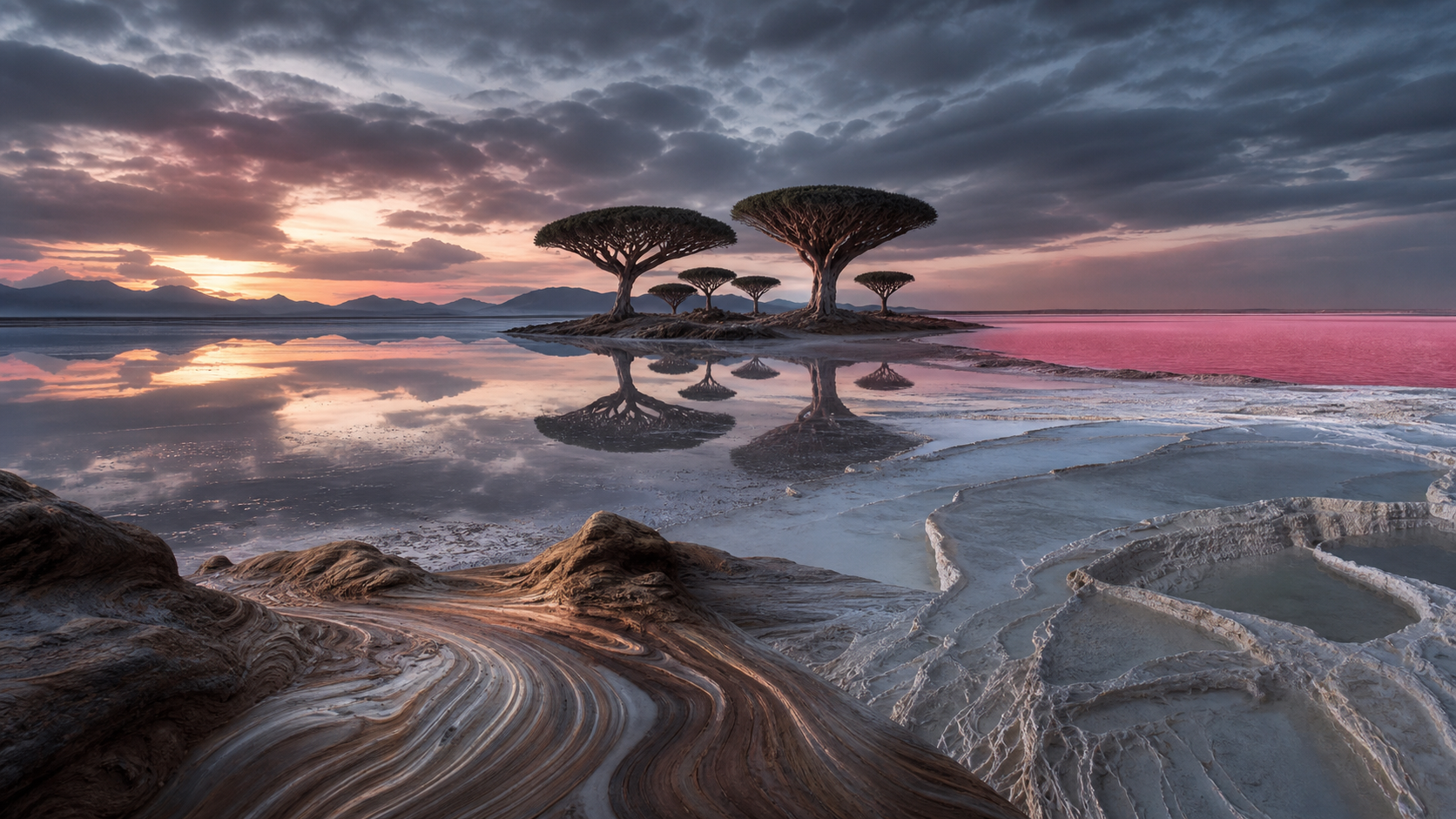
7 Strange Places That Look Unreal
These real landscapes look impossible because natural processes sometimes produce results stranger than visual expectation.
Some places on earth look like they were designed by someone who had never visited reality. Not because they were altered or staged, but because geology, climate, chemistry, and time can combine in ways that strain the visual processing of anyone standing in front of them. These seven places are all real, all photographable, and all genuinely difficult to believe.
01. The Salar de Uyuni, Bolivia
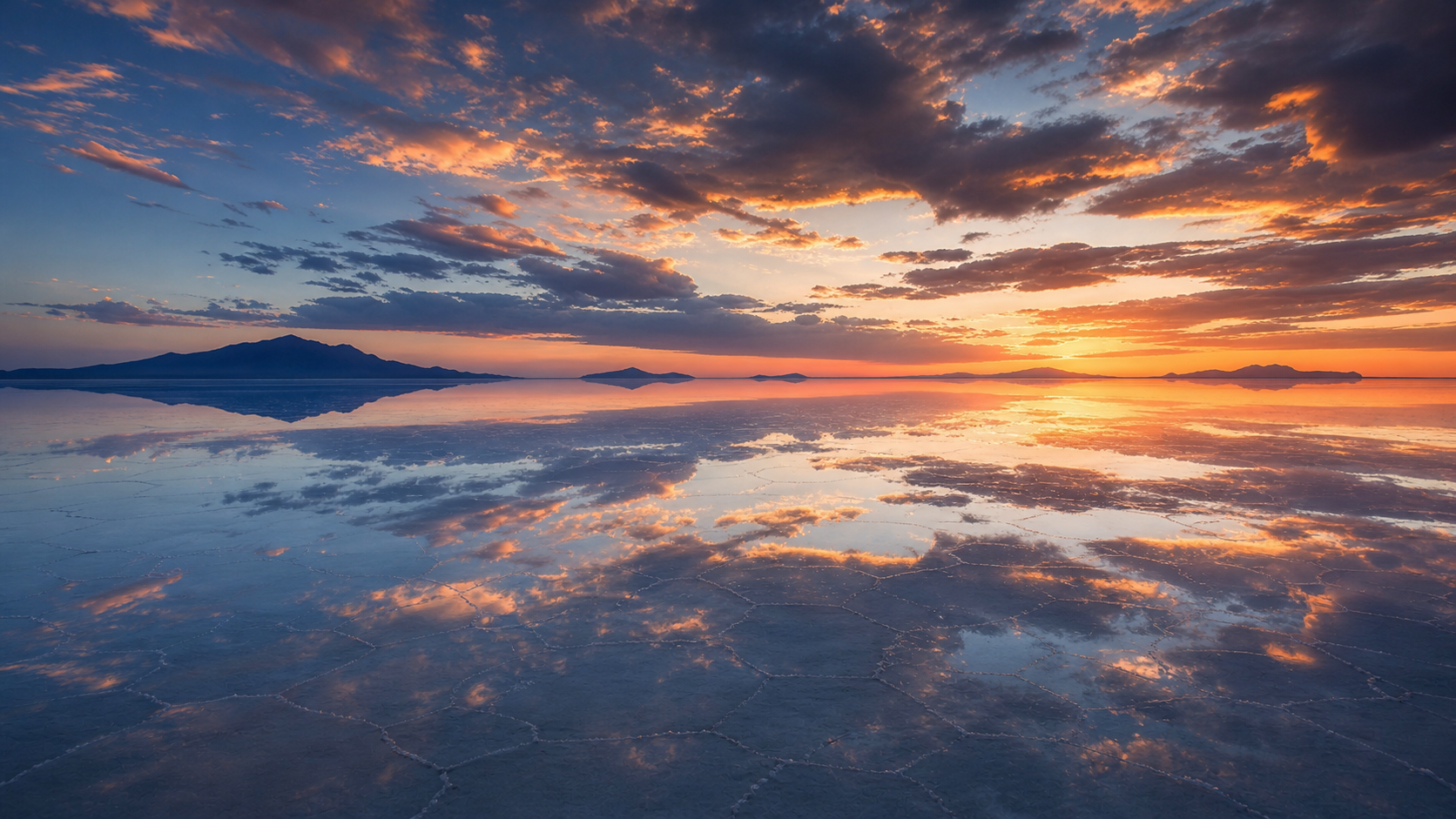
At over ten thousand square kilometers, the Salar de Uyuni is the largest salt flat on earth. In the dry season, it is a blinding white expanse of hexagonal salt tiles, so flat and so vast that the curvature of the earth becomes visible. In the wet season, a thin layer of water turns the entire surface into the world's largest mirror. The sky, the clouds, and anything standing on the flat become indistinguishable from their reflections. Photographs taken there look like they have been mirrored in post-production. They have not.
The flat was formed by the evaporation of a prehistoric lake thousands of years ago. Beneath the crust sits the world's largest known lithium deposit, which gives the place an industrial significance that sits oddly alongside its visual impossibility.
02. Socotra Island, Yemen
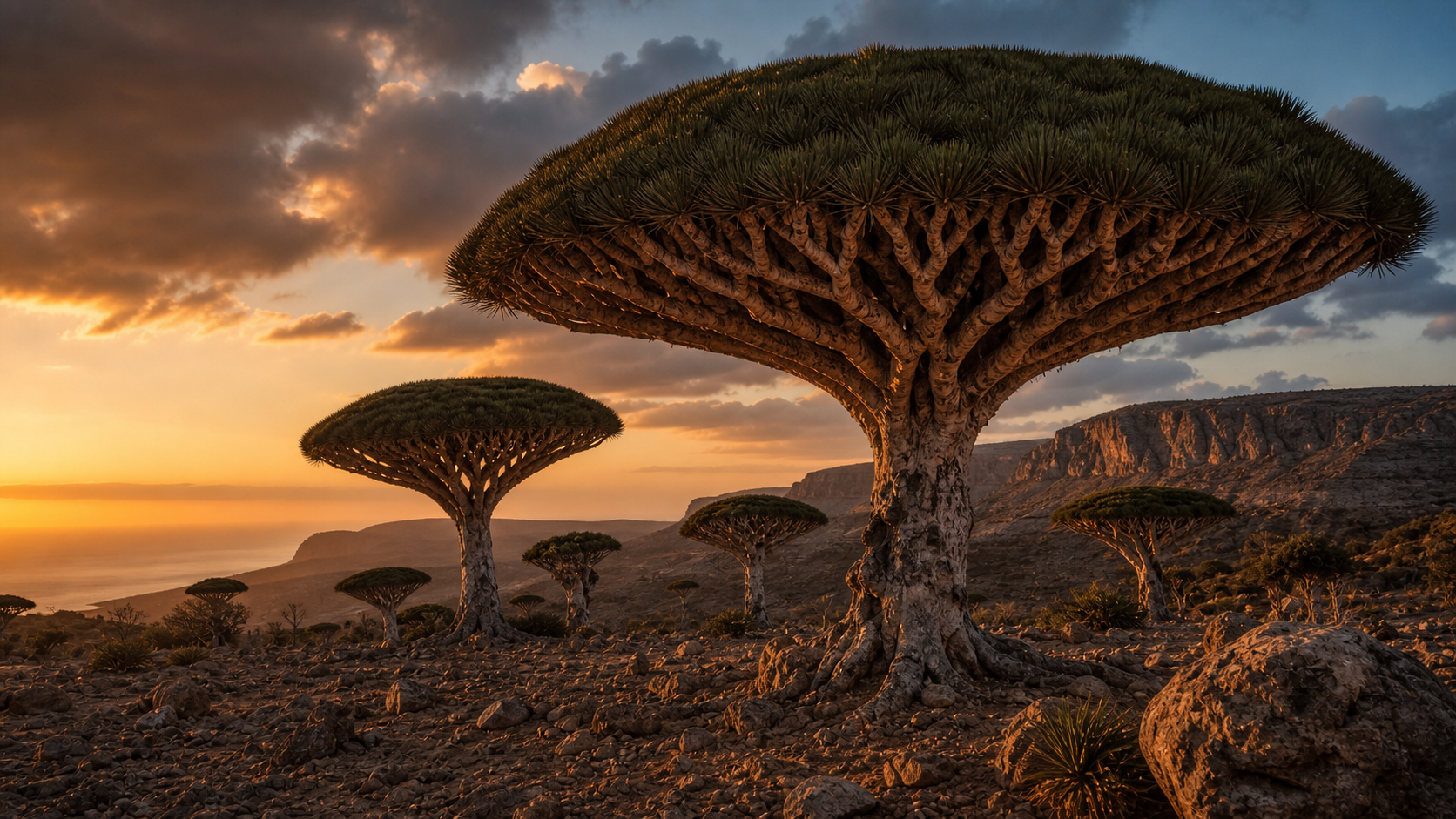
Socotra has been isolated from the African and Arabian mainland for so long — roughly six million years — that a third of its plant species exist nowhere else on earth. The most visible result of this isolation is the dragon blood tree: a species with a dense, perfectly circular canopy held on a single trunk, like an umbrella designed by someone who had only been told what umbrellas were and had never seen one. The trees look like they belong in a science fiction production design, not in a real ecosystem.
The island also hosts the desert rose, a succulent that grows from bare rock and produces flowers before it has visible leaves, and cucumber trees that store water in their swollen trunks. The overall effect of walking through Socotra's interior is of a landscape assembled from the wrong parts.
03. Fly Geyser, Nevada, USA
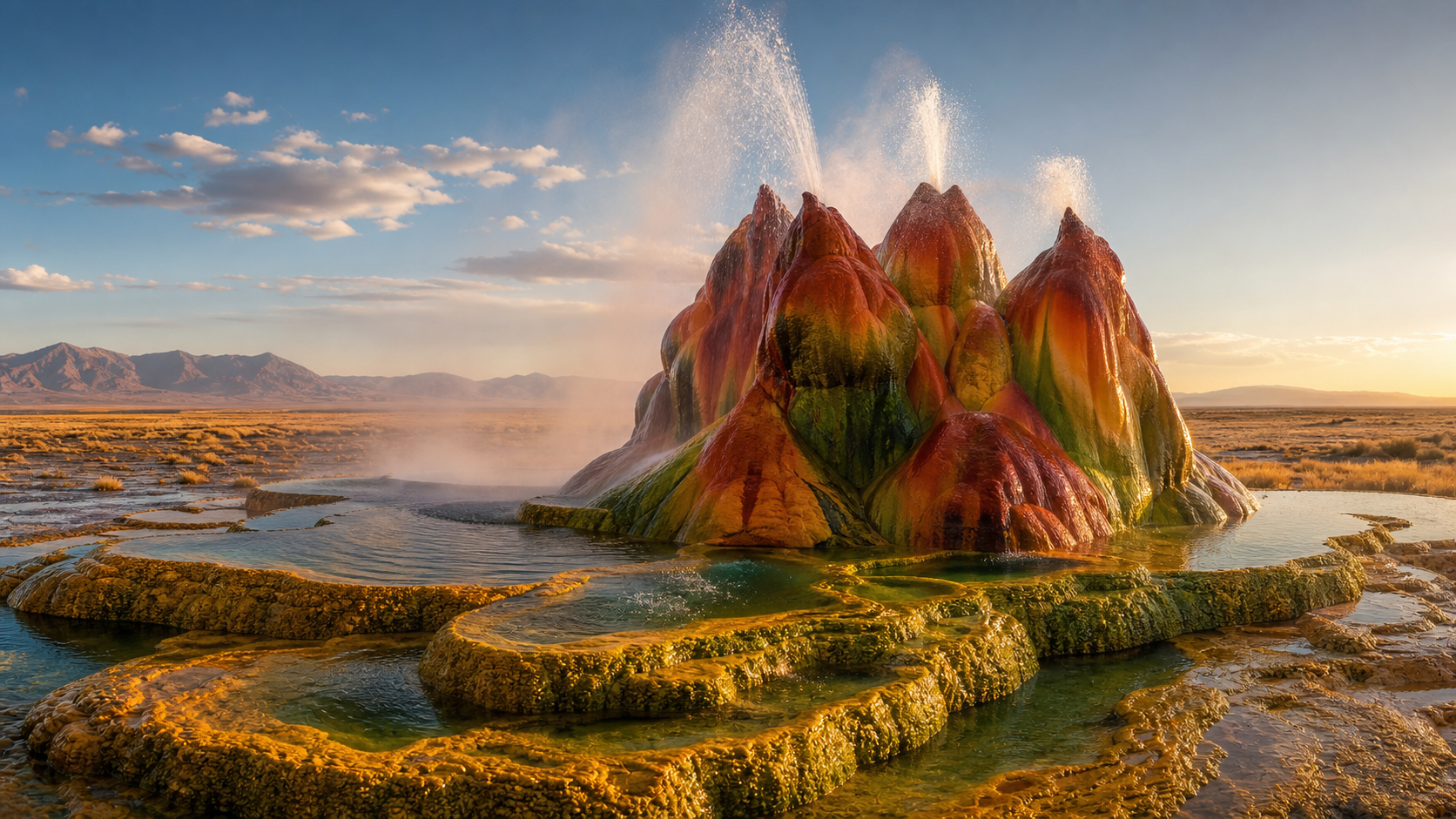
Fly Geyser is not entirely a natural formation — it was accidentally created during well-drilling operations in 1964, when a geothermal pocket was struck and not properly capped. The geyser has been erupting continuously since then, depositing calcium carbonate and other minerals that have built up into a multi-tiered mound roughly two meters high.
The colors — vivid red, orange, and green — come from thermophilic algae that thrive in the superheated water. The result is an object that looks like concept art for an alien world: a constantly steaming, intensely colored mineral structure on the floor of a Nevada desert. It sits on private land and was only opened to limited public visits in recent years.
04. The Wave, Arizona, USA
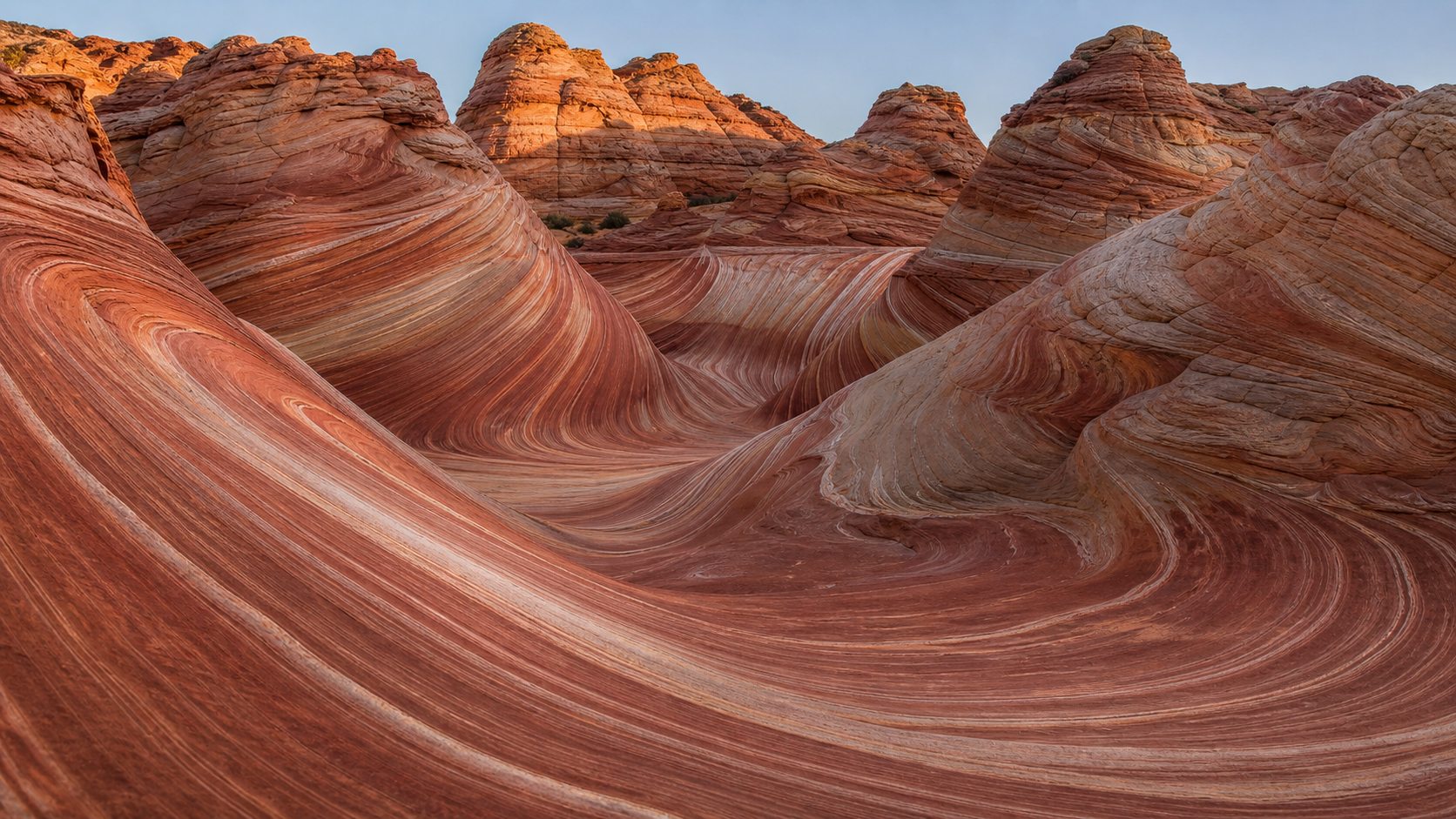
The Wave is a sandstone rock formation in the Coyote Buttes area of the Arizona-Utah border, accessible only on foot and by permit, with entry strictly limited to protect the surface. The formation consists of intersecting U-shaped troughs in layered Navajo sandstone, whose colors — red, pink, orange, and cream — flow in bands that follow the curve of the rock.
The visual effect is of a frozen fluid — as if the stone was once liquid and set mid-motion. The cross-bedded layers, laid down as ancient sand dunes over two hundred million years ago, run in different directions and create the appearance of a surface that is simultaneously still and moving. Photographs of it routinely need captions confirming they have not been digitally altered.
05. Lake Hillier, Western Australia
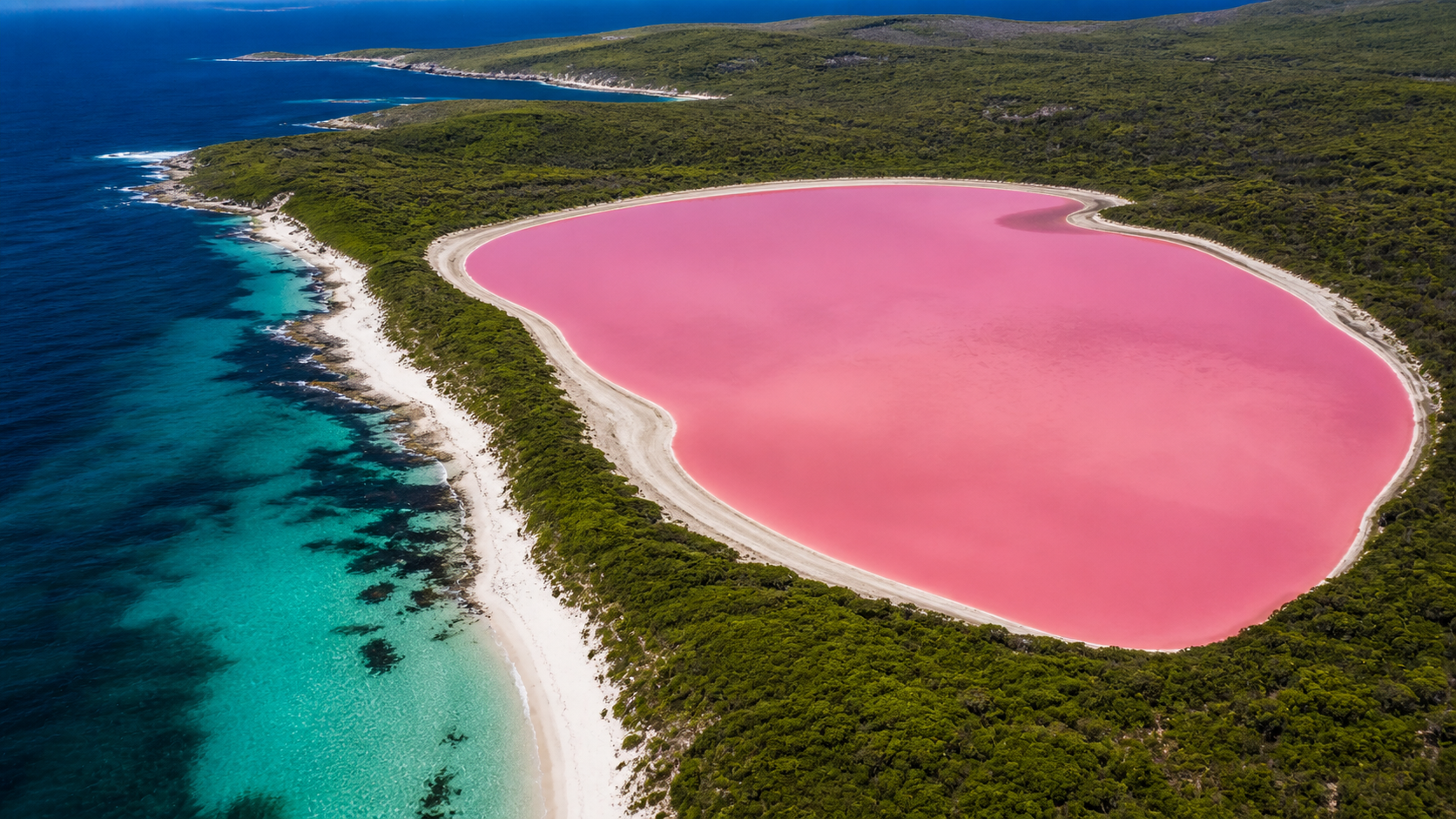
Lake Hillier, on Middle Island off the southern coast of Western Australia, is pink. Not pinkish. Not pink at certain times of day or in certain weather. Consistently, durably, visibly pink from above and from the shore, while the ocean immediately adjacent is normal blue.
The color comes from a combination of the halophilic bacterium Salinibacter ruber and the algae Dunaliella salina, which produce carotenoid pigments in the hypersaline water. The lake is separated from the ocean by a narrow strip of trees and a beach, making the contrast between the two colors sharp and clear. The water retains its color even when bottled. The lake is safe to swim in, though access is restricted.
06. The Zhangjiajie Pillars, China
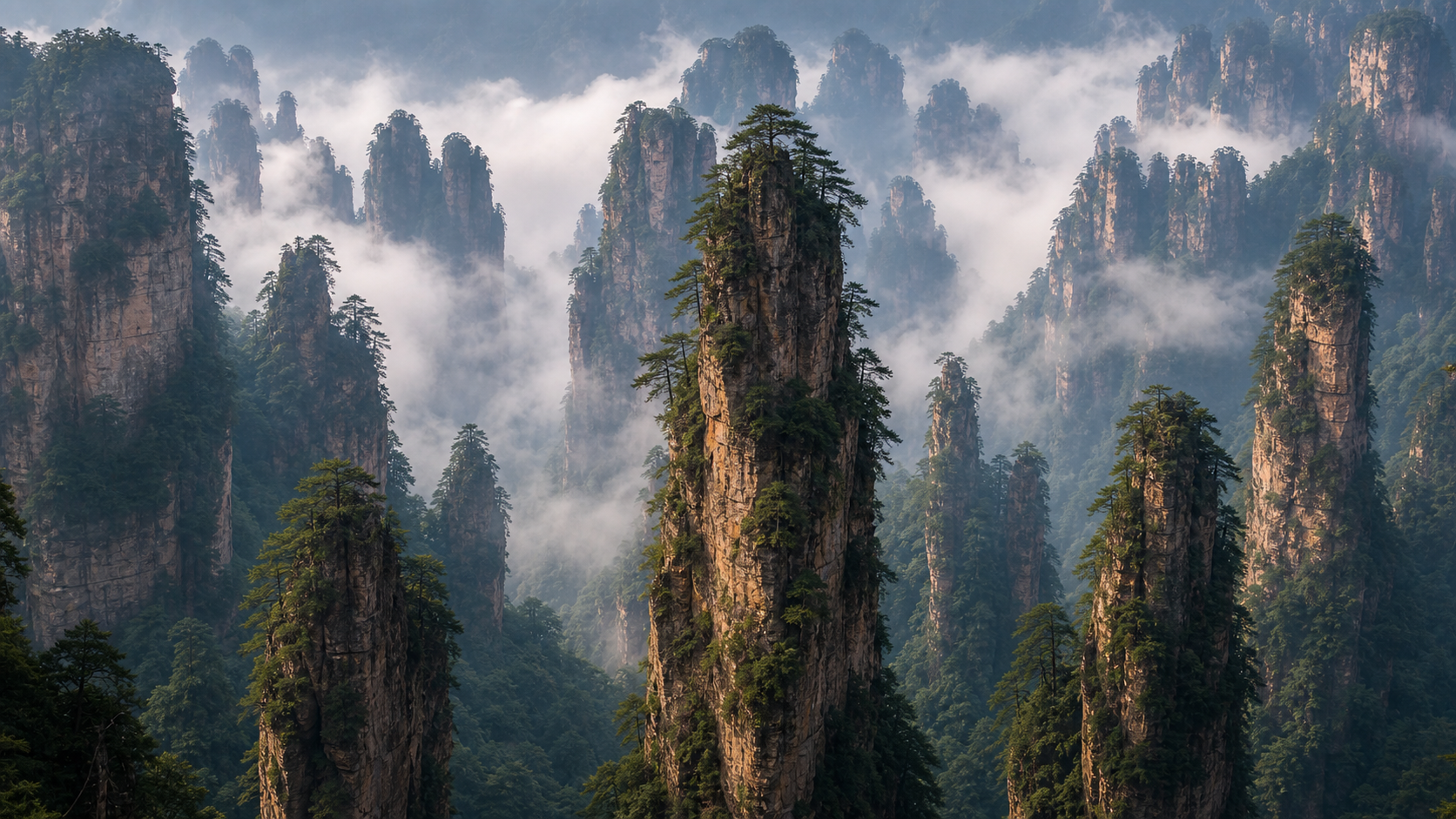
The sandstone pillars of Zhangjiajie National Forest Park in Hunan Province rise hundreds of meters from the valley floor, densely forested on their tops and sheer on their sides. There are more than three thousand of them. The tallest exceeds three hundred meters. They were formed by erosion acting on quartz sandstone over millions of years, gradually isolating columns that were more resistant than the material around them.
The landscape is so visually unusual that it served as a primary reference for the floating mountains in James Cameron's Avatar. Seeing photographs of Zhangjiajie without that context produces a specific disorientation: the pillars look like something generated by a landscape algorithm rather than by geology.
07. Pamukkale, Turkey
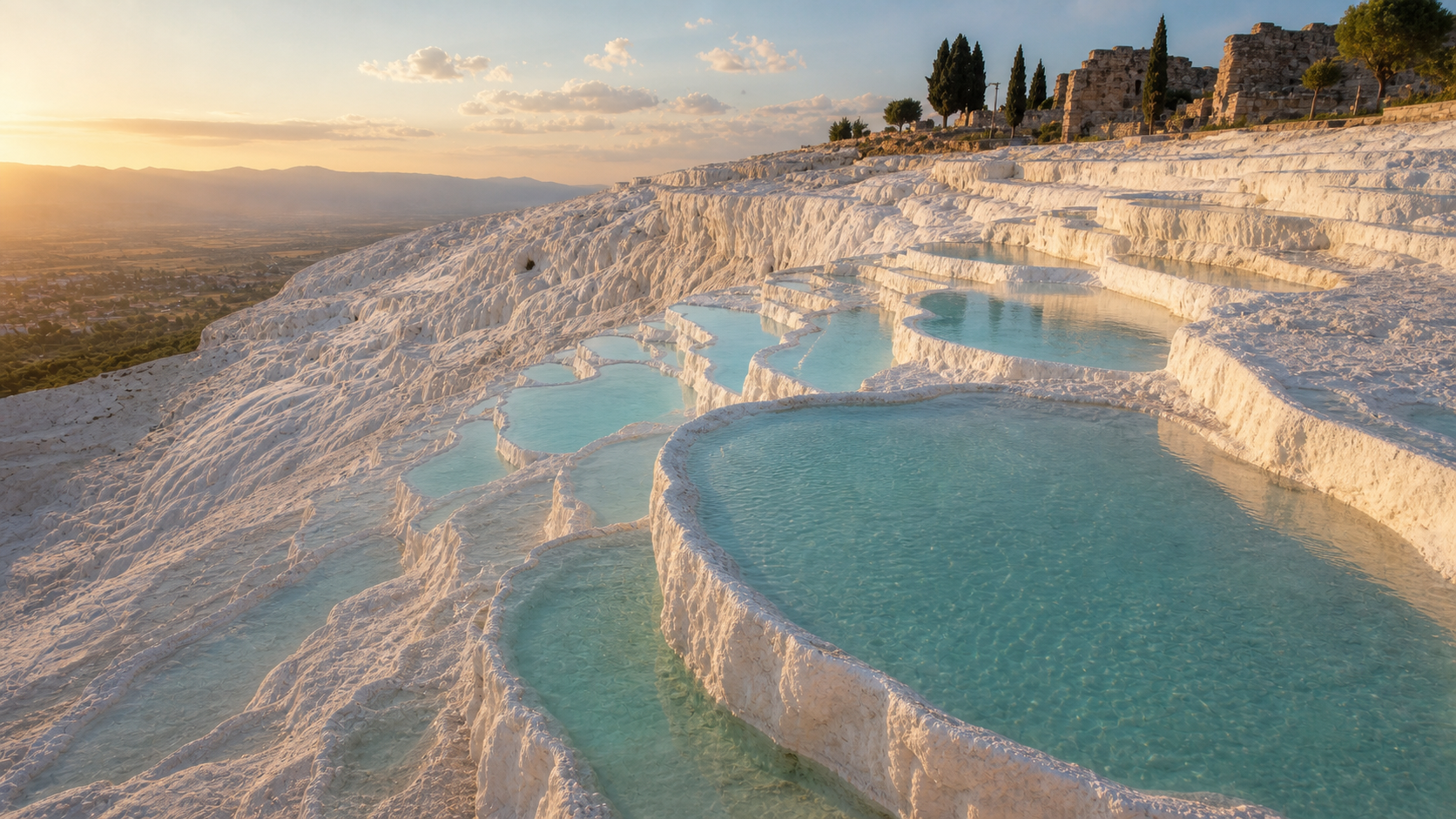
Pamukkale — the name means cotton castle in Turkish — is a series of white terraced pools on a hillside in southwestern Turkey, formed by calcium carbonate deposited by the thermal waters flowing down the slope. The terraces are bright white, filled with blue-green water, and stack down the hillside in a formation that looks less like a natural landscape and more like an architectural rendering of one.
The site has been used as a thermal spa since ancient times. The Roman city of Hierapolis was built at its top, and its ruins remain. The combination of the ancient ruins, the white terraces, and the thermal pools creates a landscape that compresses an implausible amount of visual information into a single view.
What all seven places share is not strangeness for its own sake. Each one is the product of real, explicable processes — geology, chemistry, biology, erosion, isolation, accident. What makes them look unreal is that the processes involved operated at scales of time or produced results of a specificity that human visual experience has no ready category for. The brain tries to file what it sees and finds nothing to file it under. That gap between what is seen and what can be understood is what unreal actually means.